
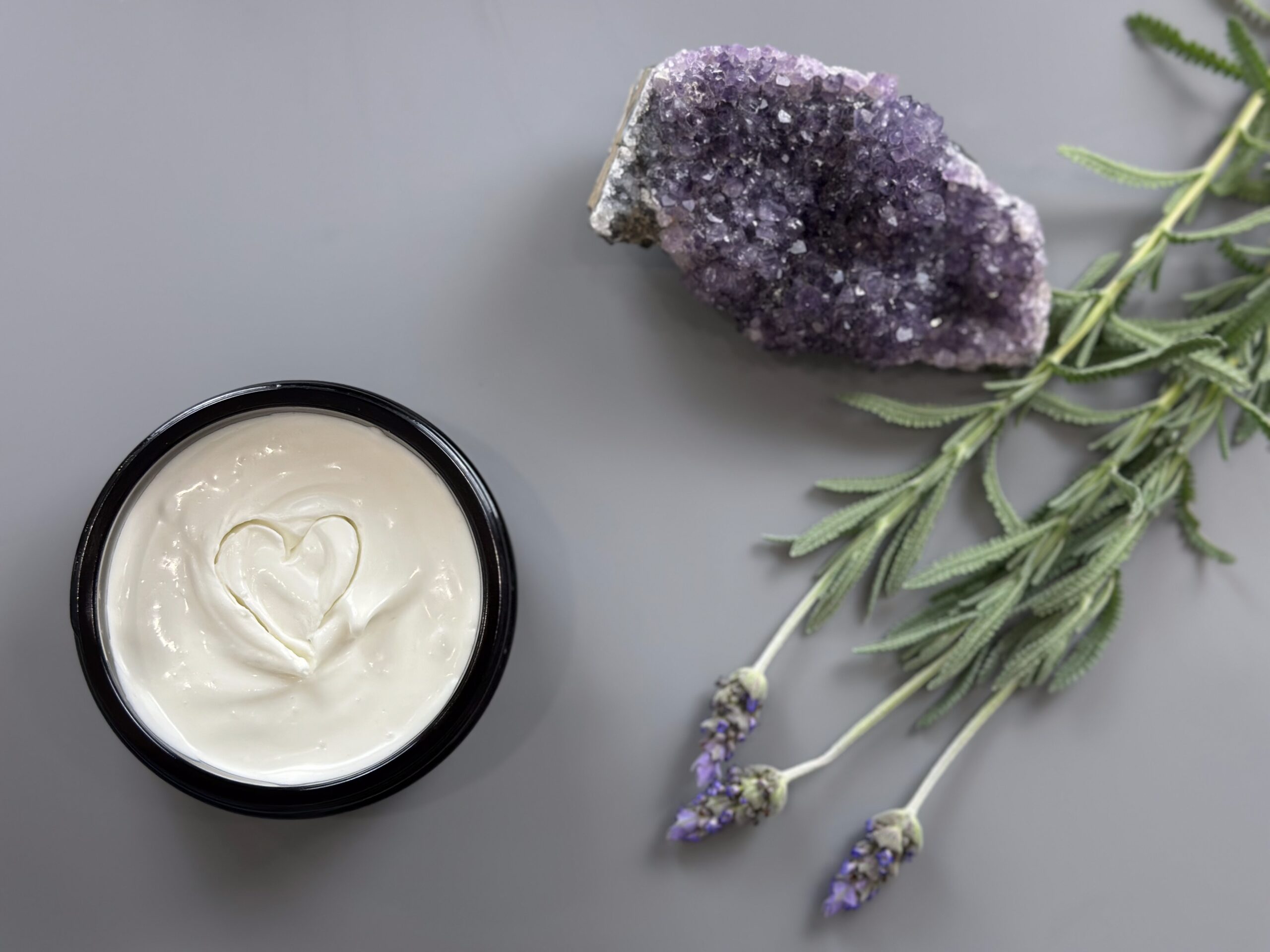
Waterless Whipped Body Butter: A Simple, Luxurious Formulation for Skin and Hair
A waterless whipped body butter is one of the easiest—and most satisfying—products to make. It requires only a few ingredients, does not contain a water phase, and transforms rich plant butters and oils into a soft, fluffy treatment for dry skin and hair.
It is an ideal place to begin if you are new to cosmetic formulation or want to create a simple, deeply nourishing product with a luxurious skin feel.
I created my first whipped body butter formula more than 20 years ago, and it remains one of my favorite formulations. In the early days, I taught about plant butters and natural skincare at colleges. One lead instructor took some of the body butter home and later told me how much it helped improve her husband’s extremely dry, cracked feet.
That experience stayed with me. A thoughtfully formulated body butter may be simple, but it can provide exceptional conditioning, softness, and protection.
What Is a Waterless Whipped Body Butter?
A waterless whipped body butter is an anhydrous formulation made without added water. It typically combines solid plant butters with liquid plant oils and other oil-soluble ingredients.
The ingredients are melted or softened, blended together, cooled, and whipped to create a light, airy texture.
Because the formulation does not contain water, it can help create a rich protective layer that reduces moisture loss and leaves the skin feeling soft, smooth, and conditioned.
Benefits of Whipped Body Butter
A well-formulated whipped body butter can:
- Soften rough, dry, or flaky skin
- Support the skin’s protective moisture barrier
- Help seal moisture into damp skin
- Improve the appearance of dry, dull skin
- Leave skin feeling supple and comfortable
- Condition dry hair and ends
- Help reduce the appearance of frizz
- Add softness and shine to textured hair
- Provide a luxurious alternative to traditional lotions
The finished product should feel rich and nourishing without leaving an excessively heavy or greasy residue.
Formula (click here) for Ultra-Nourishing Whipped Body Butter
Suitable Skin Types
Whipped body butter can be adapted for:
- Normal skin
- Dry skin
- Combination skin
- Mature skin
- Sensitive skin
- Oily skin, when lightweight ingredients are selected
It is especially helpful for skin that feels:
- Dry
- Rough
- Flaky
- Tight
- Dehydrated
- In need of additional barrier protection
Formulation Profile
Formulation type: Waterless or anhydrous
Texture: Soft, thick, whipped butter
Viscosity: High
Primary use: Body moisturizer and protective skin treatment
Additional use: Hair and scalp conditioning product
How to Use Whipped Body Butter
Apply a small amount once or twice daily.
For the best results, massage the butter onto slightly damp skin after a shower or bath. Applying it to damp skin helps seal in surface moisture and can make the product feel more moisturizing.
Because whipped body butter is concentrated, begin with a small amount. Allow it to melt on contact with the skin and massage until evenly distributed.
For hair, apply a very small amount to damp or dry ends. It may also be used to seal in moisture, smooth frizz, add shine, or protect dry areas of textured hair.
Formulating Body Butter for Skin
For a skin-focused body butter, select plant butters and oils that provide lasting nourishment while still spreading and absorbing well.
Rich ingredients can be balanced with lighter plant oils or natural emollients to reduce drag and greasiness.
A good skin formulation should:
- Melt easily during application
- Spread smoothly
- Soften rough areas
- Leave a protective but comfortable finish
- Avoid feeling excessively waxy or oily
The ratio of solid butters to liquid oils will determine the product’s firmness, melting point, and final skin feel.
Formulating Body Butter for Hair
A hair butter should generally be lighter than a traditional body butter.
Heavy butters and oils may work well for thick, coarse, curly, coily, or highly textured hair but may weigh down fine or low-density hair.
For a multipurpose skin and hair butter, choose lighter oils and use rich butters in moderation. The finished product can be used to:
- Seal moisture into the hair
- Smooth dry ends
- Reduce the appearance of frizz
- Add shine
- Soften braids, twists, curls, and coils
- Protect hair from feeling dry and brittle
The best ingredient combination depends on the hair type, porosity, density, and desired finish.
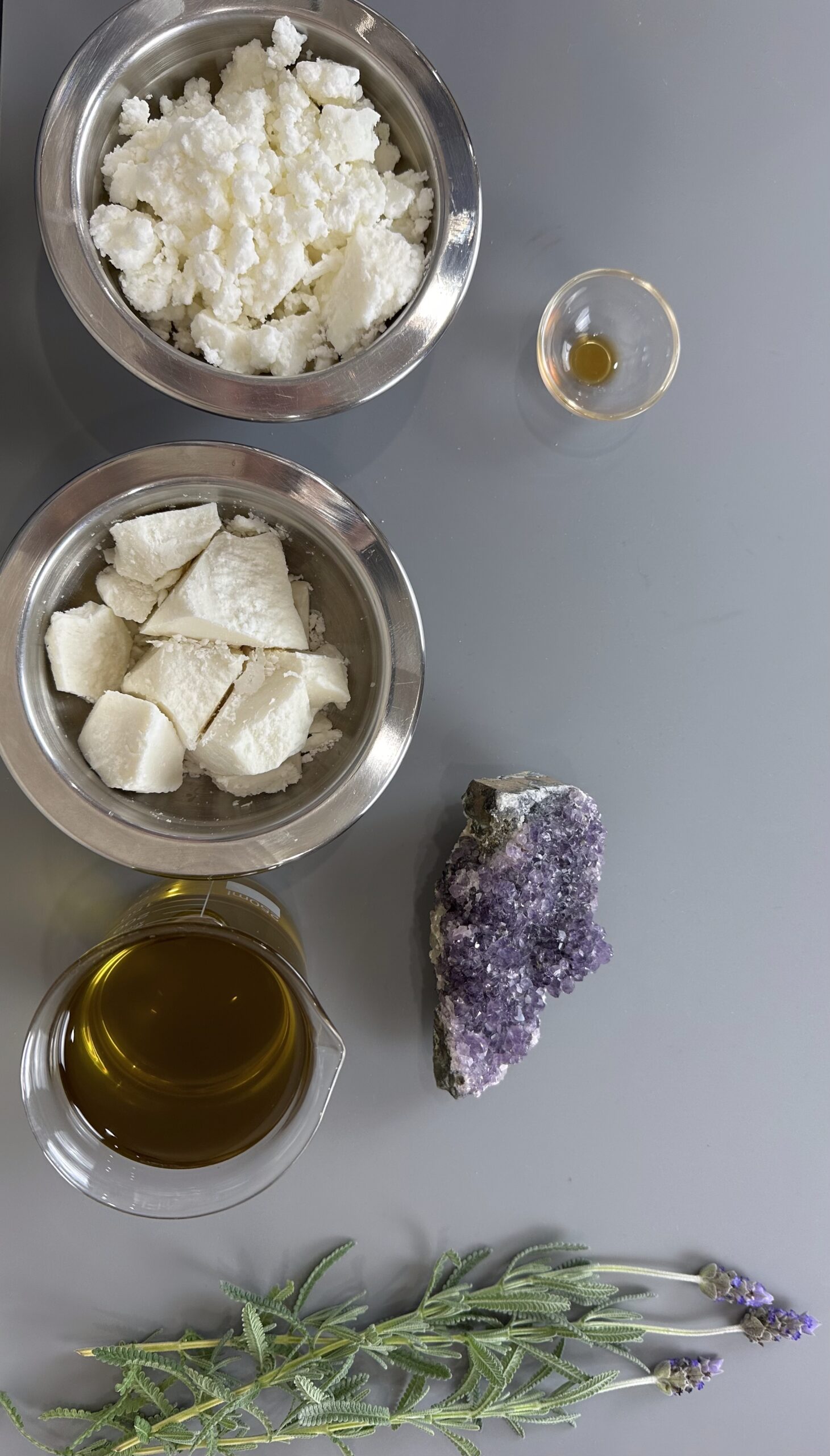
High-Performance Ingredients for Whipped Body Butter
Cocoa Butter
Cocoa butter is a firm, protective plant butter valued for its rich emollient properties. It helps soften the skin, reduce moisture loss, and give body butter structure.
It melts close to body temperature, allowing it to soften as it is massaged into the skin. However, using too much can make a formulation feel hard, waxy, or slow to absorb.
Unrefined cocoa butter has a noticeable chocolate aroma and a pale cream-to-yellow color. This aroma may compete with essential oils or fragrances.
Naturally deodorized cocoa butter is often a better choice when you want a neutral scent or a lighter-colored finished product.
Shea Butter
Shea butter is widely used in skin and hair formulations because of its rich, conditioning texture. It helps soften dry skin, reduce moisture loss, and improve the feel of rough or compromised areas.
It also works well in products for dry, curly, coily, and textured hair.
Unrefined shea butter may have a strong, earthy or nutty aroma, and its natural color can affect the appearance of the finished body butter.
Naturally refined shea butter has a more neutral aroma and lighter color, making it easier to combine with essential oils or other aromatic ingredients.
Other Plant Butters
You can customize the texture and performance of your formulation with other plant butters, including:
- Cupuaçu butter
- Mango butter
- Murumuru butter
- Sal butter
- Kokum butter
Each butter has a different melting point, firmness, absorption rate, and sensory profile. Combining two or more butters can create a more balanced texture than relying on one butter alone.
Sweet Almond Oil
Sweet almond oil is a lightweight, versatile plant oil that spreads easily and leaves the skin feeling soft and conditioned.
It contains fatty acids and naturally occurring vitamin E compounds and is commonly used in formulations for dry, normal, and mature skin.
Sweet almond oil can also add slip and shine to hair products. However, formulators creating products for a broad audience may wish to consider nut sensitivities and provide clear ingredient labeling.
Lavender Essential Oil
Lavender essential oil adds a familiar floral-herbal aroma that many people associate with relaxation and self-care.
In a body butter, it can provide a pleasant aromatic experience when used at an appropriate skin-safe level.
Essential oils should always be properly measured and used according to current supplier recommendations and applicable IFRA guidance. More essential oil does not necessarily create a better or safer product.
Learn to make Infused Lavender Almond Oil for an extra boost of soothing, aromatic benefits
How to Make Whipped Body Butter
You only need a few pieces of equipment to begin:
- Heat-safe containers
- A digital scale
- A mixing utensil
- A hand or stand mixer
- Clean, dry packaging
- Plant butters and oils
The general process includes:
- Weigh the ingredients accurately.
- Gently melt or soften the plant butters.
- Blend in the liquid oils.
- Allow the mixture to cool until it begins to thicken.
- Whip until light and fluffy.
- Transfer the butter into clean, dry containers.
Cooling is one of the most important steps. If the mixture is whipped while it is still too warm, it may not hold its airy texture. If it becomes too cold and firm, it may be difficult to whip smoothly.
Customize Your Body Butter
Once you understand the basic formulation, you can customize it by changing:
- The butter-to-oil ratio
- The combination of plant butters
- The weight and absorption rate of the oils
- The fragrance or essential oil blend
- The final firmness
- The intended use for skin, hair, or both
You can also work with infused oils, oil-soluble botanical extracts, antioxidants, or natural emollients to create a more distinctive product.
Every change affects the texture, stability, melting point, and skin feel, so make one adjustment at a time and document each test batch.
Important Formulation Considerations
Although a waterless body butter is beginner-friendly, it still requires good formulation practices.
Consider the following:
- Weigh ingredients rather than measuring by volume.
- Keep all equipment and packaging clean and completely dry.
- Add an antioxidant to help slow the oxidation of plant oils.
- Protect the product from heat and direct sunlight.
- Test the butter in its intended packaging.
- Evaluate it during both warm and cool weather.
- Use essential oils only at appropriate dermal levels.
- Label all ingredients correctly.
- Conduct stability and compatibility testing before selling the product.
Because whipped products contain air, their volume can change during storage. Warm conditions may also cause the butter to soften, melt, collapse, or become grainy.
Does Waterless Body Butter Need a Preservative?
Traditional broad-spectrum preservatives are generally designed for products containing water. A properly manufactured anhydrous body butter may not require the same preservative system as an emulsion or lotion.
However, water can be introduced during use through wet hands, bathroom humidity, or damp skin. Packaging and directions should help minimize water contamination.
An antioxidant such as mixed tocopherols may help slow rancidity, but an antioxidant is not the same as a preservative.
The need for microbial testing, preservation, or additional protective measures depends on the complete formulation, manufacturing method, packaging, and intended use.
A Beautiful Introduction to Cosmetic Formulation
A waterless whipped body butter is simple enough for a beginner but versatile enough for an experienced formulator to customize and refine.
You can create it for personal use, give it as a handmade gift, or develop it into a professional product for your skincare or haircare line.
With the right balance of plant butters and oils, a whipped body butter can feel rich without being overly greasy, protective without feeling waxy, and luxurious without requiring a complicated formulation.
It is more than a moisturizer. It is an opportunity to learn how ingredient ratios, melting points, cooling, whipping, and sensory properties work together to create a beautiful finished product.
You might also like