
Formulating and Testing Vegan Waxes in Lip Balm
The purpose of lip balm is to protect, moisturize, and soothe the delicate skin on the lips. Unlike most areas of the body, lips have:
-
Very thin skin with no oil (sebaceous) glands to keep them naturally moisturized.
-
High exposure to environmental stressors like sun, wind, cold, and dry air.
Because of this, lips easily become dry, chapped, and cracked.
Why Lip Balm Matters
Lip balm serves several key functions for healthy, comfortable lips:
-
Moisturization – Provides hydration with emollients and humectants (like plant oils, butters, hyaluronic acid).
-
Barrier Protection – Creates a thin protective layer that locks in moisture and shields against harsh weather and pollution.
-
Healing and Comfort – Helps repair cracked or irritated lips with soothing ingredients (e.g., calendula, bisabolol).
-
Cosmetic Enhancement – Can add shine, tint, or fragrance while keeping lips smooth.
-
Preventive Care – Regular use prevents dryness and reduces the risk of painful cracks or infection.
Formulating with Vegan Waxes
Traditional lip balms often rely on beeswax for structure and protection. To create vegan formulations, we tested different plant-derived vegan waxes and esters to compare their performance to our tried-and-tested Pro Natural Skin Course lip balm formulation.
Candelilla Wax
-
Source: Derived from the leaves of the candelilla shrub.
-
Properties: Harder than beeswax, produces a glossy finish, higher melting point.
-
Results: Creates a firm balm with good protection and smooth glide, though slightly less cushiony. It’s best blended with softer oils for balance.
Carnauba Wax
-
Source: From the leaves of the Brazilian palm.
-
Properties: The hardest natural wax, highly glossy, very high melting point.
-
Results: Creates a hard balm and less spreadable. Great for stability in warmer climates but needed more liquid oils to improve glide. Adds shine but can feel stiff if overused.
Rice Bran Wax
-
Source: Extracted from rice bran oil during refining.
-
Properties: Medium-hard wax, creamy texture, good oil-binding capacity.
-
Results: Produces a balm with nice payoff, smooth glide, and light shine. Closer to beeswax in texture, giving a balance of firmness and cushion.
Sunflower Wax
-
Source: Extracted from sunflower seed oil.
-
Properties: Hard, high melting point wax; stabilizer; helps improve consistency and increase melting point of soft formulations.
-
Results: Creates a stable, protective balm with good structure and moderate gloss. Firmer than rice bran wax but not as stiff as carnauba. Excellent for adding strength to softer butter-rich balms.
Specialty Vegan Waxy Esters & Structurants
Tribehenin
-
Source: Triester of glycerin and behenic acid (plant-derived).
-
Properties: Creamy, film-forming, stabilizing, improves glide and cushion.
-
Results: Lip balm feels plush and cushiony, with a soft, luxurious glide and long wear time.
Polyhydroxystearic Acid
-
Source: Derived from castor oil.
-
Properties: Liquid wax ester, creamy, dispersing agent, boosts smoothness.
-
Results: Improves slip and emollience, gives a softer balm texture, reduces waxy drag.
Behenyl Behenate
-
Source: Ester of behenic acid + behenyl alcohol (plant-based fatty alcohol + fatty acid).
-
Properties: Firm structurant, reduces greasiness, silky glide, stable in balms.
-
Results: Produces a smooth and protective balm, with a more “elegant,” lightweight feel on the lips.
Download our Vegan Waxes and Esters Lip Balm Comparison Chart
Comparison to Our Pro Natural Skin Course Formula
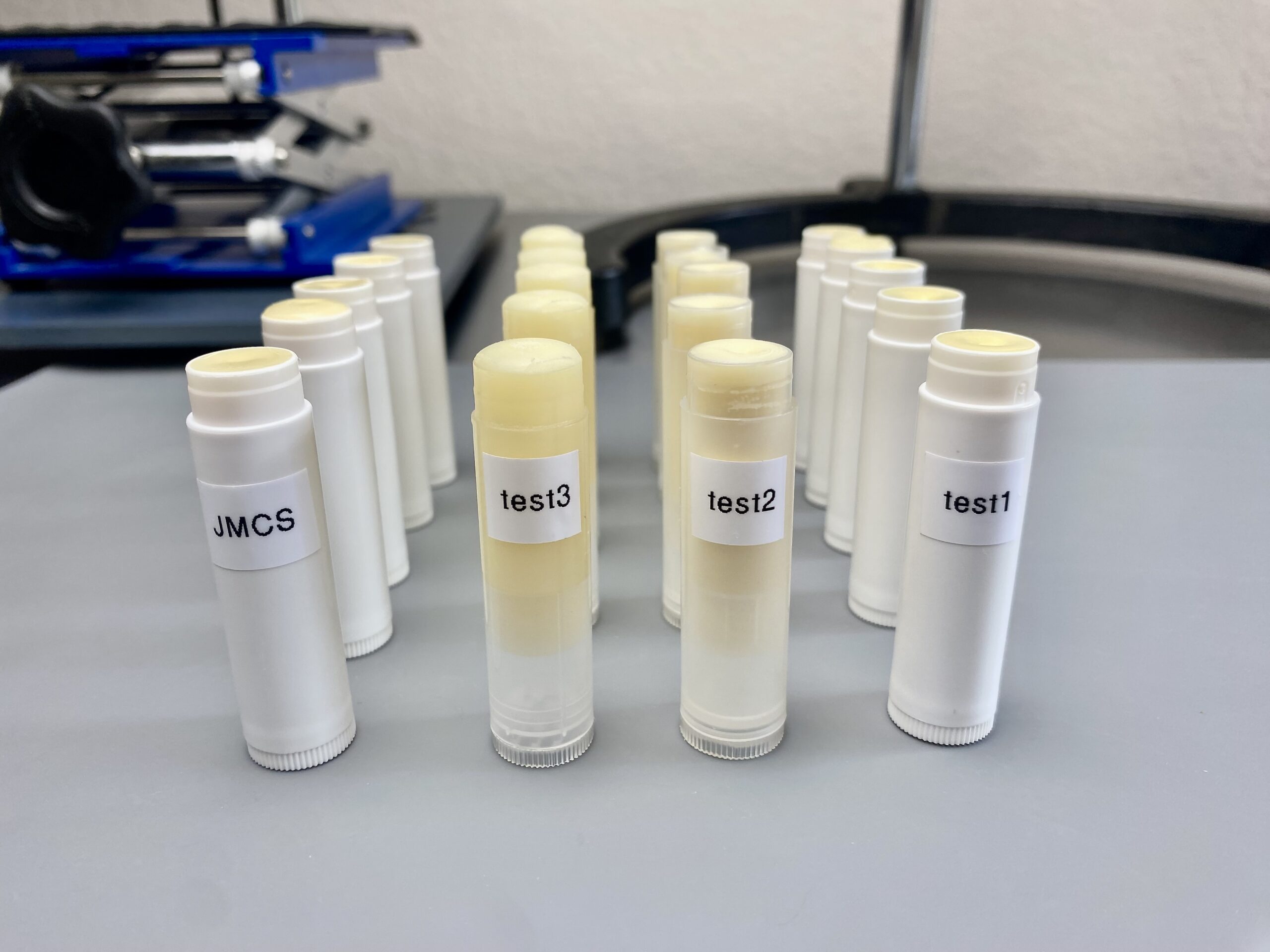
We formulated and tested three lip balms with vegan waxes and esters and compared them to our Pro Natural Skin Course lip balm formulation:
-
#1 (Candelilla Wax + Rice Bran Wax + Tribehenin): Went on smoothly, light film, long-lasting protection, no shine, similar to a chapstick.
-
#2 (Candelilla Wax + Rice Bran Wax + Polyhydroxystearic Acid+ Behenyl Behenate): Glide was protective but stiffer, also with no shine. Best for high-heat stability.
-
#3 (Candelilla Wax + Polyhydroxystearic Acid+ Behenyl Behenate blend): Cushionier with a soft glide and light shine, closest in feel to beeswax.
- JMCS Pro Course Formula (Candelilla Wax): Beautiful glide, protective barrier, long-lasting moisture, and shine. Very stable and fresh for at least 5 years. This is our favorite all-around formulation because it is so simple to make with few ingredients and the one we teach in the Pro Natural Skin Course. It can easily be customized to add more cushion or remove the shine and be similar to a chapstick.
Our Conclusions
-
Waxes → Provide firmness and structure.
-
Esters → Provide creaminess, cushion, and glide.
-
Best results often come from blending both waxes + esters.
-
Our Pro Course Formula remains the gold standard for stability, protection, and sensory performance, but testing alternatives helps students learn how to customize for different lip balm goals. Module 12 is being updated for our lifetime course students to give them lots of options and easy adjustments to make the best lip balm, lip treatment.
At Joan Morais Cosmetics School, we love testing new materials and helping formulators understand how different ingredients perform. Our Pro Natural Skin Course walks you through formulating stable, effective lip balms and many more professional skin care products with plant-based ingredients.
You might also like