

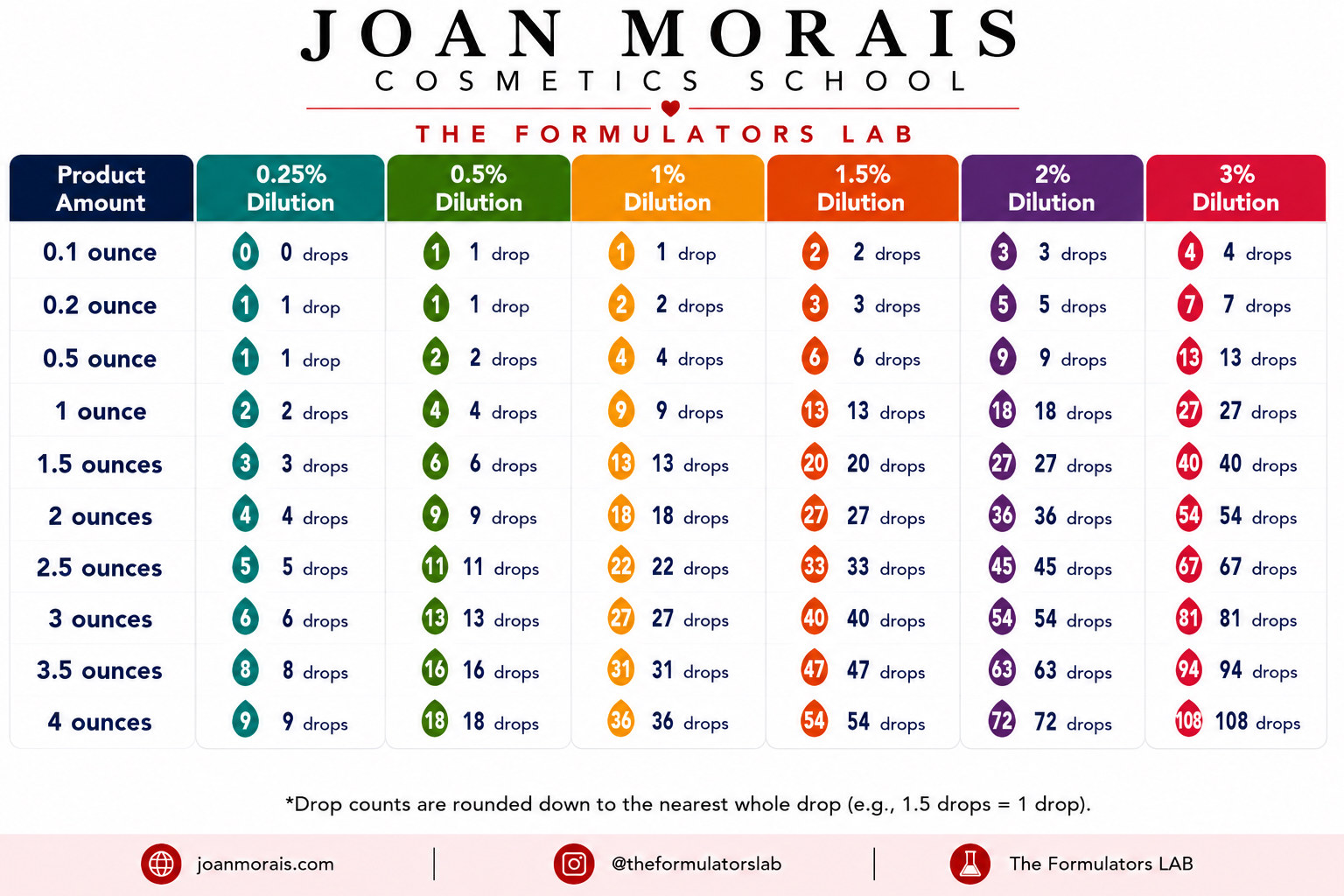
Note: All drop counts are rounded down to the nearest whole drop. For example, 1.5 drops becomes 1 drop, since partial drops cannot be accurately measured.
Essential Oil Safety in Cosmetic Formulation
Essential oils are powerful aromatic plant extracts that can add beautiful scent, sensory experience, and functional properties to cosmetic products. However, because they are highly concentrated, they must be used carefully and respectfully in formulation.
A single drop of essential oil contains a concentrated amount of volatile aromatic compounds. Improper use can contribute to irritation, sensitization, phototoxicity, or adverse reactions, especially when used undiluted or at excessive levels.
Whether you are creating products for yourself, family, or customers, understanding safe usage is an important part of responsible formulation.
An Aromatherapist and Formulator’s Perspective on Essential Oil Safety
Joan Morais has been a practicing aromatherapist for over 18 years and has worked extensively with essential oils throughout her cosmetic formulation career and personal life. Through decades of hands-on experience formulating skin, body, and hair care products, she understands both the benefits and the powerful effects of essential oils on the skin and body. Joan has also personally experienced sensitization from products containing excessive levels of essential oils, reinforcing the importance of conservative, thoughtful usage and proper dilution practices in formulation.
Essential Oils Are Highly Concentrated
Essential oils are not the same as infused oils or herbal extracts. They are concentrated volatile compounds distilled or expressed from plants.
For example:
- It can take hundreds of pounds of plant material to produce a small amount of essential oil.
- Citrus oils are often cold pressed from peels.
- Some floral oils require enormous quantities of flowers for a tiny yield.
Because of this concentration, essential oils should almost never be applied undiluted to the skin.
Even oils considered “gentle” can cause irritation or sensitization when overused.
A Conservative Usage Guideline
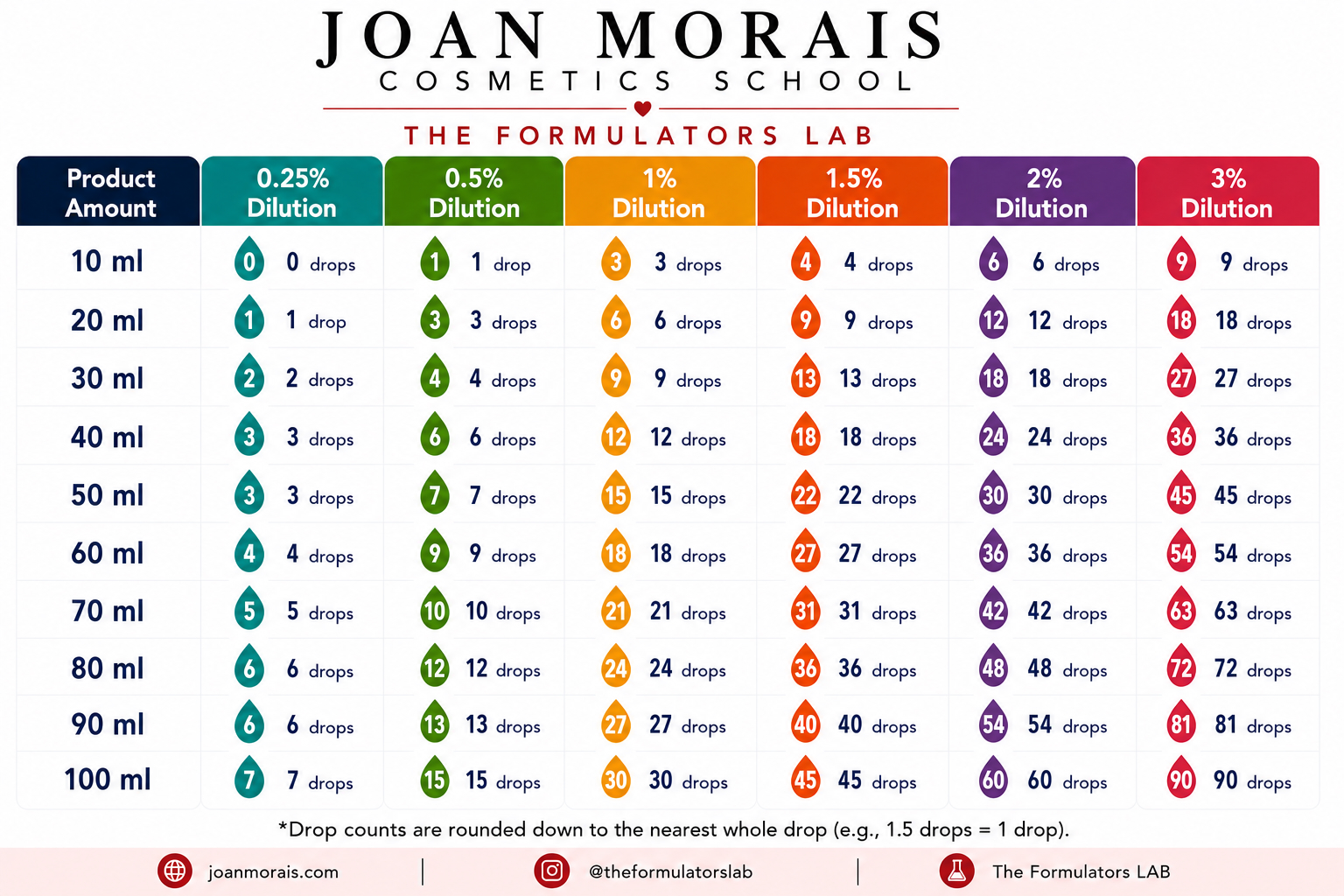
Note: All drop counts are rounded down to the nearest whole drop. For example, 1.5 drops becomes 1 drop, since partial drops cannot be accurately measured.
A conservative and common usage rate for many adult leave-on body products is approximately:
- 9 drops per 1 ounce (30 mL / 30 g)
- This is roughly a 1% dilution
This can be a useful beginner reference point for body oils, lotions, creams, and similar products intended for healthy adults.
However, usage rates should always be adjusted depending on:
- The essential oil used
- The type of product
- The area of application
- Frequency of use
- The age and health of the user
- IFRA dermal limits and safety data
Some essential oils require significantly lower levels.
General Conservative Dilution Suggestions
Adults
For many leave-on body products:
- 0.5%–1% is often a conservative range
- Facial products are typically lower, 0.2%
- Wash-off products may sometimes tolerate slightly higher levels
Example:
- 1 ounce / 30 mL = approximately 9 drops for ~1%
Children
Children are more sensitive to essential oils because of:
- Developing skin barriers
- Smaller body size
- Increased absorption relative to body weight
A conservative approach is recommended:
- Often around 0.25%–0.5%
- Some essential oils should be avoided entirely for young children
Always research oils individually before use.
Newborns
Elderly Individuals
Older adults may have:
- Thinner skin
- Increased sensitivity
- Health conditions or medications that increase reactivity
A gentler dilution range is often preferred:
- Approximately 0.25%–0.5%
- Especially for leave-on products
Skin Sensitization and Irritation
Irritation
Some essential oils may cause:
- Redness
- Burning
- Itching
- Dryness
- Inflammation
This can occur immediately after exposure.
Sensitization
Sensitization is more serious and can develop over time.
Repeated exposure to an essential oil at unsafe levels may trigger the immune system to react. Once sensitized, a person may react even to tiny amounts later.
This is one reason conservative use is so important.
Examples of oils more associated with sensitization concerns include:
- Cinnamon bark
- Clove
- Oregano
- Thyme
- Lemongrass
These oils are generally used at very low levels in skin products.
Phototoxic Essential Oils (Sun Sensitivity)
Some citrus essential oils can increase the skin’s sensitivity to UV exposure, potentially contributing to burns, discoloration, or irritation after sun exposure.
These are called phototoxic oils.
Common examples include:
- Bergamot (unless bergaptene-free/FCF)
- Cold-pressed lemon
- Cold-pressed lime
- Bitter orange
- Grapefruit (to a lesser degree)
If using phototoxic oils:
- Keep usage levels low
- Avoid direct sun exposure after application
- Consider steam-distilled or FCF versions when appropriate
Essential Oils Commonly Used With Extra Caution
Some essential oils are typically used sparingly due to potency or irritation concerns.
Examples include:
- Cinnamon bark
- Cassia
- Clove bud
- Oregano
- Thyme thymol chemotype
- Wintergreen
- Birch
- Peppermint (especially around children)
- Eucalyptus (young children require caution)
These oils are generally not beginner oils for leave-on products.
Less Is Often Better
More essential oil does not necessarily make a better product.
Overuse may:
- Increase irritation potential
- Overpower the scent
- Create instability
- Reduce elegance of the formulation
- Increase sensitization risk
Well-formulated products often use essential oils thoughtfully and conservatively.
Essential Oil Drops vs. Weighing Essential Oils
Many beginner formulations reference essential oils in “drops,” but drops are not highly precise.
Drop size can vary depending on:
- The viscosity of the oil
- The dropper used
- Bottle opening size
- Temperature
For professional formulation and manufacturing:
Weighing is preferred
Using a scale provides:
- Better accuracy
- Improved reproducibility
- More consistent safety calculations
- Easier scaling
Drops can be helpful for:
- Very small hobby batches
- Learning dilution concepts
- Simple DIY projects
But professional formulators typically formulate by weight.
Essential Oil Usage in Formulations
Essential oils should be used conservatively in cosmetic formulations due to their highly concentrated nature and the potential for irritation or sensitization when overused. Lower usage rates are often preferred, especially in leave-on products that remain on the skin for extended periods of time. The type of product, area of application, frequency of use, and the individual essential oil itself should all be considered when determining a safe usage level.
General conservative usage suggestions include:
- Face Formulations: approximately 0.1–0.3%
Facial skin is typically more delicate and sensitive, making lower dilution levels preferable. - Body Formulations: approximately 1–2%
Body oils, lotions, creams, and butters may tolerate slightly higher levels depending on the essential oils used. - Hair Formulations: approximately 0.3–1%
Hair products such as shampoos, conditioners, scalp serums, and styling products often require lower amounts while still providing aromatic and sensory benefits.
Additional Safety Considerations
Always:
- Patch test products when appropriate
- Follow IFRA dermal limits
- Research individual essential oils carefully
- Avoid internal use unless properly trained
- Store oils away from heat, light, and oxygen
- Keep out of reach of children and pets
Oxidized essential oils may increase irritation and sensitization potential, so freshness and proper storage matter.
Formulator Key Notes
Essential oils can be beautiful additions to cosmetic formulations when used responsibly. A conservative, safety-focused approach helps support elegant, skin-friendly products while reducing unnecessary risk.
Understanding dilution, skin sensitivities, phototoxicity, and proper usage levels is an important part of becoming a skilled and responsible formulator.
When in doubt:
- Use less
- Research thoroughly
- Prioritize safety over intensity
- Formulate conservatively and intentionally
🌹 🌿 🌱 Learn more about essential oil safety, dilution practices, and how to properly incorporate essential oils into professional skin, body, and hair care formulations through the formulation courses at Joan Morais Cosmetics School and specialized classes at The Formulators LAB.
You might also like