

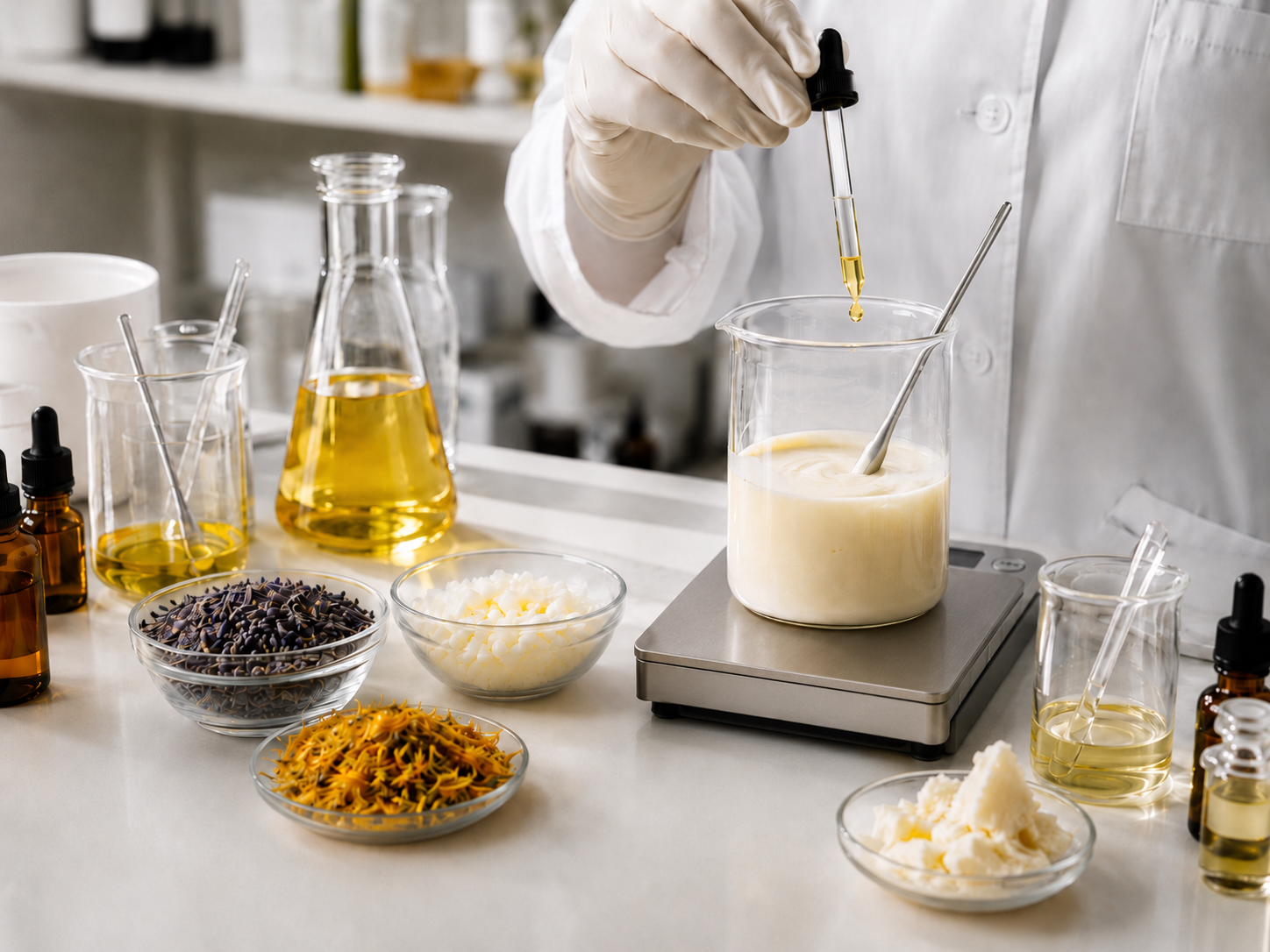
How Formulation Training Helps and Can Save You Thousands
Hiring a private label laboratory or contract manufacturer can be an exciting step toward launching or expanding your hair care or skin care brand. A manufacturer can help refine a formulation, scale production, conduct testing, fill your containers, and manufacture products in quantities that would be difficult to produce on your own.
However, working with a manufacturer can also be expensive, especially when you are still trying to determine exactly what you want your product to be.
Over the years, many students have told us that completing the Professional Natural Hair Care Formulation Course or the Professional Natural Skin Care Formulation Course before approaching a manufacturer helped them save approximately $5,000 to $30,000 or more in formulation development costs, testing, revisions, consulting, and avoidable production decisions.
These savings are not guaranteed and will vary by project, manufacturer, product complexity, and testing requirements. However, the principle is simple: the more you understand and prepare before hiring a laboratory, the less time and money may be required to develop your final product.
You Become Clear About the Product You Want
One of the most expensive ways to begin working with a contract manufacturer is to approach them with only a general idea.
You may know that you want a moisturizing cream, curl product, facial serum, shampoo, conditioner, cleanser, or scalp treatment, but that is only the beginning.
Before a product can be manufactured, many decisions need to be made:
- What should the product do?
- What ingredients should it contain?
- What ingredients should it avoid?
- What texture and viscosity should it have?
- How should it feel on the skin or hair?
- Should it be clear, opaque, lightweight, rich, creamy, foaming, or gel-like?
- What type of preservative system will it require?
- What packaging will work with the formulation?
- What price does the finished product need to meet?
Our Professional Formulation Courses help students work through these decisions before they begin paying a manufacturer or consulting chemist.
Instead of asking a laboratory to create an undefined product from the beginning, the student can approach the manufacturer with a much clearer product concept, ingredient philosophy, performance goal, and manufacturing plan.
You Understand the Ingredients in Your Product
Many new brand owners begin with a list of popular ingredients they have seen online or in competing products. However, a professional formulation is much more than a collection of attractive ingredients.
Every ingredient must have a purpose within the formulation.
Students learn to understand the roles of ingredients such as:
- Emulsifiers
- Surfactants
- Conditioners
- Humectants
- Emollients
- Thickeners
- Gelling agents
- Preservatives
- Antioxidants
- Chelating agents
- Botanical extracts
- Active ingredients
- Fragrance and essential oil systems
This knowledge helps students decide which ingredients are truly necessary and which ingredients may not be compatible, stable, effective, or appropriate for the desired product.
It also helps them communicate their ingredient standards to a manufacturer. For example, they may want their products to be vegan, plant-based, naturally derived, aligned with green chemistry principles, or formulated without particular ingredients.
When you understand your ingredients, you are better prepared to evaluate a proposed formula rather than accepting every recommendation without knowing why the ingredient is being used.
You Can Develop the Product Before Taking It to a Manufacturer
Many of our students begin by developing and testing their own formulations through the Professional Natural Hair Care Formulation Course or Professional Natural Skin Care Formulation Course.
They create different versions, evaluate the texture and performance, adjust the ingredients, and continue refining the product until they have a formulation they love.
Once they have developed the product on a small scale, they can take the formulation or product concept to a qualified manufacturer for professional evaluation, testing, scale-up, and commercial production.
The manufacturer may still need to make adjustments. A formulation that performs well in a small laboratory batch may require changes when it is produced with larger equipment and at a larger scale. Raw material availability, processing conditions, manufacturing equipment, packaging, regulatory requirements, and stability testing may also affect the final formula.
However, starting with a thoughtfully developed formulation can substantially reduce the amount of exploratory development the manufacturer needs to complete.
Instead of saying, “Please create a moisturizer for me,” the student may be able to say:
“This is the formulation I developed. This is the texture, performance, ingredient philosophy, and skin feel I want to maintain. I need your laboratory to evaluate it, improve it where necessary, complete the required testing, and scale it for production.”
That is a very different starting point.
You Can Communicate With the Chemist and Manufacturer
Students have told us that chemists and manufacturers were surprised by how much they understood about formulation and manufacturing.
Some were even asked:
“How do you know so much about formulating?”
Because the students understood formulation terminology, ingredient functions, manufacturing procedures, preservation, testing, and product development, they were able to participate meaningfully in conversations with the laboratory.
They could understand discussions about:
- Formula percentages
- Ingredient substitutions
- Emulsion stability
- Viscosity
- pH
- Preservative systems
- Microbiological testing
- Heat and cold stability
- Packaging compatibility
- Minimum order quantities
- Pilot batches
- Scale-up
- Production procedures
- Raw material sourcing
This knowledge can help reduce misunderstandings and make the development process more efficient.
You do not need to become the contract manufacturer’s chemist. The manufacturer is still responsible for reviewing the formula, confirming that it can be manufactured safely, completing appropriate testing, and complying with applicable requirements.
However, understanding what the chemist is discussing allows you to ask better questions and make more informed decisions about your own products.
You Can Work Out Problems Before Paying for Manufacturer Revisions
Contract manufacturers and laboratories may charge for:
- Initial product development
- Ingredient research
- Samples
- Formula revisions
- Additional rounds of samples
- Stability testing
- Microbiological testing
- Packaging compatibility testing
- Pilot production
- Scale-up
- Regulatory or documentation services
When a brand owner is unclear about the desired texture, ingredients, performance, packaging, or target customer, the project may require multiple revisions.
Each revision can add time and cost.
Students who have already worked through the formulation process may be better prepared to evaluate samples and provide specific feedback. Instead of saying, “I don’t like it,” they may be able to explain:
- The cream is too waxy.
- The conditioner does not provide enough slip.
- The cleanser is removing too much oil from the skin.
- The gel does not have enough hold.
- The serum is pilling under other products.
- The emulsion feels too heavy for the intended customer.
- The fragrance level is too high.
- The viscosity may not work with the selected pump.
Clear technical feedback can help the chemist make more targeted adjustments and may reduce unnecessary rounds of development.
You Learn How to Cost Out the Product
A beautiful formula is not automatically a commercially viable product.
Before manufacturing, the brand owner needs to understand whether the product can be produced and sold at a sustainable price.
Our Professional Formulation Courses help students understand how to calculate a formulation and evaluate the cost of the ingredients used in the product.
This allows students to consider:
- Raw material costs
- Ingredient usage percentages
- Packaging costs
- Manufacturing costs
- Testing expenses
- Labeling
- Shipping materials
- Fulfillment
- Wholesale pricing
- Retail pricing
- Profit margins
A student may love a formulation but discover that the ingredients make it too expensive for the intended retail price. It is much better to identify that issue early than after paying for development, testing, packaging, and a large production run.
Understanding product costing also helps students review manufacturer quotes and determine whether the finished product supports their business model.
You Can Make Better Packaging Decisions
The container is not separate from the formulation. The formulation and packaging must work together.
A thin serum may leak from packaging intended for a thicker product. A rich cream may not dispense properly through a small pump. Certain active ingredients may require protection from light or air. Some products may need tubes, jars, treatment pumps, airless packaging, foamer bottles, or other specialized containers.
Students learn to think about factors such as:
- Product viscosity
- Dispensing method
- Air and light exposure
- Container opening size
- Pump compatibility
- Product contamination
- Consumer use
- Fill weight
- Packaging compatibility
Working through these decisions before production can prevent costly packaging mistakes.
Ordering thousands of containers that do not work with the formulation can be an extremely expensive error. Understanding both the product and the packaging helps students have more productive conversations with manufacturers and packaging suppliers.
You Understand the Importance of the Preservative System
Preservation is one of the most important parts of developing a water-based hair care or skin care product.
Choosing a preservative is not as simple as selecting an ingredient from a supplier’s website. The preservative must be appropriate for the formula, pH, manufacturing process, packaging, ingredients, and intended use.
Students learn that the preservative system must be considered during formulation development, not added as an afterthought.
They also learn why professionally manufactured products may require microbiological challenge testing and additional testing to confirm that the preservation system is effective.
This knowledge helps students communicate their preferences while understanding that the manufacturer or testing laboratory must verify whether the chosen preservation system is suitable for the final commercial product.
You May Save Hundreds of Hours
Product development requires research, experimentation, documentation, calculations, ingredient sourcing, sample evaluation, and decision-making.
When the manufacturer must guide the brand owner through every foundational decision, the process can become longer and more expensive.
Our students often complete much of this preliminary work themselves. They have already researched ingredients, developed product concepts, made test batches, evaluated performance, considered packaging, calculated costs, and identified the qualities they want in the finished product.
That preparation can represent hundreds of hours of work.
The student enters the manufacturing relationship with greater clarity, realistic expectations, and a stronger understanding of the product development process.
Formulation Training Gives You Greater Ownership of Your Brand
A contract manufacturer can be an important partner, but you are still the owner of the brand.
You need to understand what you are selling.
Formulation education can help you make informed decisions rather than relying entirely on a private label company, salesperson, consultant, or manufacturer to define your products for you.
It can also help you evaluate whether a manufacturer’s existing stock formula truly supports your brand positioning or whether you need a more customized formulation.
The goal is not necessarily to manufacture every product yourself forever. Many students plan to begin with small-batch production and later move to a contract manufacturer. Others intend to use a manufacturer from the beginning.
In both situations, formulation knowledge gives the brand owner a stronger foundation.
Professional Manufacturing and Testing
Completing a formulation course does not eliminate the need for qualified professionals.
A contract manufacturer or laboratory may still need to:
- Review and modify the formulation
- Confirm ingredient availability
- Develop the manufacturing procedure
- Produce pilot batches
- Scale the formula
- Conduct stability testing
- Complete microbiological testing
- Evaluate packaging compatibility
- Prepare production documentation
- Confirm compliance with applicable regulations
- Manufacture and fill the finished product
The difference is that an educated brand owner enters the process prepared.
You understand the product you want, the ingredients you prefer, the performance you expect, and the questions you need to ask.
Prepare Before You Approach a Manufacturer
Before contacting a private label laboratory or contract manufacturer, consider completing the foundational development work first.
The Professional Natural Hair Care Formulation Course and Professional Natural Skin Care Formulation Course teach students how to develop professional-quality formulations while building a practical understanding of ingredients, formulation systems, preservation, manufacturing, testing, packaging, costing, and product development.
This education has helped many of our students approach manufacturers with confidence. They are able to clearly explain their products, understand technical conversations, evaluate recommendations, and participate actively in the development of their own brands.
That preparation may save a significant amount of time and money, and help you create a product that more accurately reflects your original vision.
What Can a Private Label Lab or Contract Manufacturer Do for You?
Once you have developed your product concept and are ready to explore manufacturing, the next step is choosing the right production partner.
Read our related guide, “What Can a Private Label Lab or Contract Manufacturer Do for You?” to learn more about formula development, scale-up, stability testing, manufacturing, filling, packaging, fulfillment, specialized processors, and the questions to ask before selecting a manufacturer.
Read the Private Label and Contract Manufacturer Guide →
Learn to Develop Your Products Before Manufacturing
Build the knowledge you need to create, evaluate, and communicate your product vision.
Explore the:
Learn how ingredients work, how professional formulations are developed, how to calculate and cost your products, and how to prepare for the transition from small-batch formulation to commercial manufacturing.
Develop the knowledge first. Create the product you love. Then approach a manufacturer with clarity and confidence.
You might also like