Types of Facial Cleansers for Gentle Skin Care
by Joan Morais
All types of facial cleansers share an important goal: removing dirt, excess oil, makeup, and sunscreen while keeping the skin comfortable and minimizing disruption to its protective barrier.
There are many types of facial cleansers, from solid pods and cleansing powders to gels, creams, and gel-to-milk formulas. Understanding how each works helps you choose a cleanser for your skin and make thoughtful decisions when you formulate.
What a face cleanser does
Water alone does not easily remove oily residue. Many cleansers use surfactants, ingredients that help oil and water interact so unwanted material can be lifted from the skin and rinsed away. Other cleansing systems use oils and emulsifiers to loosen oily buildup and help it wash off.
A well-formulated cleanser balances cleansing performance with skin comfort. It should remove what you need it to remove, rinse as intended, and leave the skin feeling comfortable after washing.
Why gentle cleansing matters for the skin barrier
The outermost layer of the skin, the stratum corneum, contains skin cells surrounded by a matrix of lipids, including ceramides, cholesterol, and free fatty acids. This structure helps regulate water loss and protects against potentially irritating substances. These barrier lipids have a different role from excess surface sebum, the oil we may want to reduce during cleansing.
An overly aggressive cleanser can disturb skin lipids and proteins. Frequent washing, hot water, or vigorous scrubbing can add to the problem. Skin may feel tight, dry, rough, or irritated afterward. A tight, squeaky-clean feeling can be a sign that the cleansing routine needs to be gentler.
Oily skin also benefits from a gentle approach. The formulation goal is to remove excess oil while minimizing unnecessary removal of the lipids and moisturizing components that help keep skin comfortable.
For more on this relationship, read How to Support the Skin Barrier Through Cosmetic Formulation.
How cleansing prepares skin for a serum or moisturizer
Cleansing removes makeup, excess oil, and surface residue, giving a serum or moisturizer a clean surface to spread over and make contact with the skin. This prepares the skin to receive the next products in your routine. Ingredient absorption depends on the ingredient, the finished formula, and the condition of the skin.
After cleansing, apply your serum according to its directions and follow with a suitable moisturizer. Applying moisturizer while the skin is still slightly damp can help retain moisture. Some treatment products need dry skin, so follow their specific instructions.
Five types of facial cleansers
Solid cleansers
Solid cleansers include bars and molded pods that release cleanser when used with water. Their compact format can reduce the need for a plastic bottle and makes them convenient to store or travel with. The ingredients determine their cleansing strength and after-feel.
Our Facial Cleansing Pods are an example of a solid facial cleanser. Learn to formulate and make them in the Facial Cleansing Pod Class. Allow the pods to dry between uses and store them away from standing water.
Explore the Facial Cleansing Pod LAB Class.
Cleansing powders
Cleansing powders are dry blends mixed with water just before use. Depending on the formulation, they may contain cleansing ingredients, solid surfactants, starches, clays, or finely milled botanical powders. Some provide exfoliation as well as cleansing.
Particle size and texture matter. Coarse particles or too much rubbing can irritate the skin. Keep water out of the package, mix only the amount you will use immediately, and discard any wet mixture left over.
Our Cleansing Exfoliant Grounds are included in the Professional Natural Skin Care Formulation Course.
Gel cleansers
Gel cleansers have a gel texture and usually combine a water phase, a cleansing system, and ingredients that build viscosity. They may produce a light lather or more foam, depending on the formula. Foam level alone does not tell you how well a cleanser cleans or how gentle it will be.
A gel format can offer a light, refreshing cleansing experience. For oily or combination skin, assess how well the formula removes excess oil and how the skin feels after rinsing.
Learn to formulate our Pore Clarifying Gel Cleanser in the Professional Natural Skin Care Formulation Course.
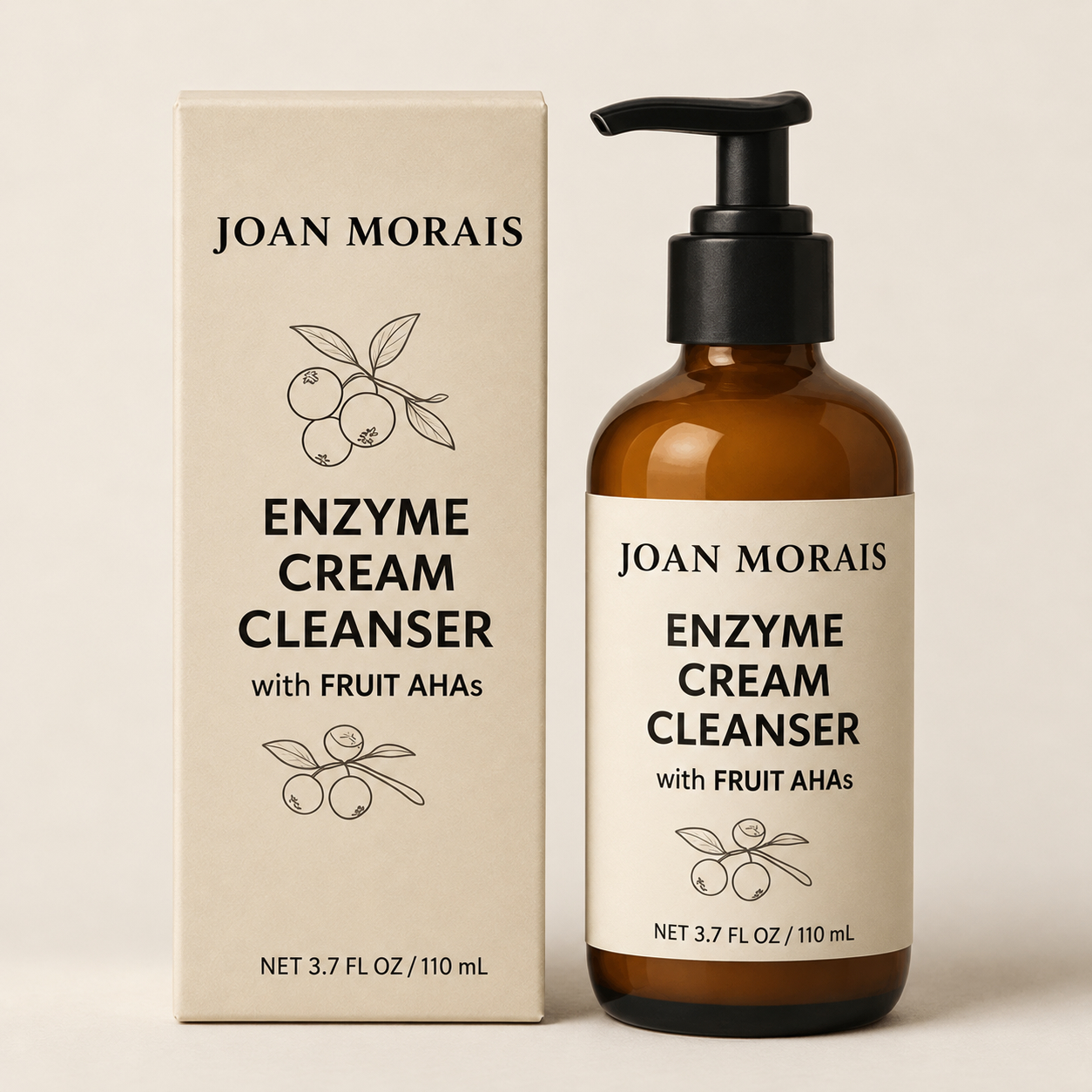
Enzyme cream cleansers
Cream cleansers offer a creamy texture with emollients that can give a soft, cushioned feel during cleansing. Some combine cleansing with exfoliation. An enzyme exfoliant, where used, needs to remain active in the finished product and be suitable for the intended contact time.
Evaluate the complete exfoliating system, its processing requirements, and skin tolerance. A creamy texture or an enzyme ingredient alone does not establish that a cleanser is suitable for sensitive skin.
Our Enzyme Cream Cleanser is included in the Professional Natural Skin Care Formulation Course.
Gel to milk cleansers
Gel-to-milk cleansers begin with a jelly or gel texture and turn milky when water is added. In an oil-rich system, oils help loosen oily residue while the emulsifying system helps disperse it into the rinse water. The texture change comes from the way the ingredients interact with water.
For formulators, the transformation is only part of the evaluation. Check makeup removal, ease of rinsing, residue, stability, and how the skin feels afterward.
Learn to make our Plant Jelly Cleanser / Gel-To-Milk in the Professional Natural Skin Care Formulation Course.
Other familiar formats include cleansing oils, balms, cleansing milks, foaming liquids, and micellar cleansers. Across all formats, mildness depends on the complete formulation and how it is used.
What to consider when formulating a gentle cleanser
- Begin with the skin’s needs and what the cleanser must remove. Choose the cleansing system and its concentration around those goals.
- Set a pH appropriate for the complete formula, including its surfactants, preservative, and any exfoliating ingredients. A skin-like pH alone does not prove mildness.
- Choose humectants, emollients, and other supporting ingredients for their function in the finished rinse-off formula. Evaluate their effect on cleansing, rinsing, and skin feel.
- For sensitive skin, consider a simple, fragrance-free approach and assess tolerance of the finished product.
- Evaluate stability, microbial protection, packaging compatibility, safety, and the evidence needed for any product claims. Dry or solid formats also need an appropriate microbial risk assessment.
Continue learning with The Sensitive Skin Guide, which explores the skin barrier, common triggers, and gentle formulation.
A gentle cleansing routine
Follow the cleanser’s directions. Use lukewarm water, a small amount of product, and gentle fingertip massage. Rinse thoroughly and pat with a soft towel. Avoid scrubbing or repeating the wash unnecessarily. Follow with your moisturizer and any other products suited to your routine.
Pay attention to how the skin feels after washing and over time. Persistent tightness, dryness, or stinging is a reason to reassess the product and routine.
Learn to formulate facial cleansers
Begin with one formulation and learn what each ingredient contributes. Explore the Facial Cleansing Pod LAB Class for a focused solid-cleanser class, or the Professional Natural Skin Care Formulation Course for our Cleansing Exfoliant Grounds, Pore Clarifying Gel Cleanser, Enzyme Cream Cleanser, and Plant Jelly Cleanser / Gel-To-Milk.
As you practice, compare cleansing performance, texture, rinsing, and skin comfort. These observations help you understand how formulation choices change the finished cleanser.
Free Formulator’s Guide
Facial Cleansers
Download this free guide for a clear, practical reference you can use at your formulator bench.
You might also like